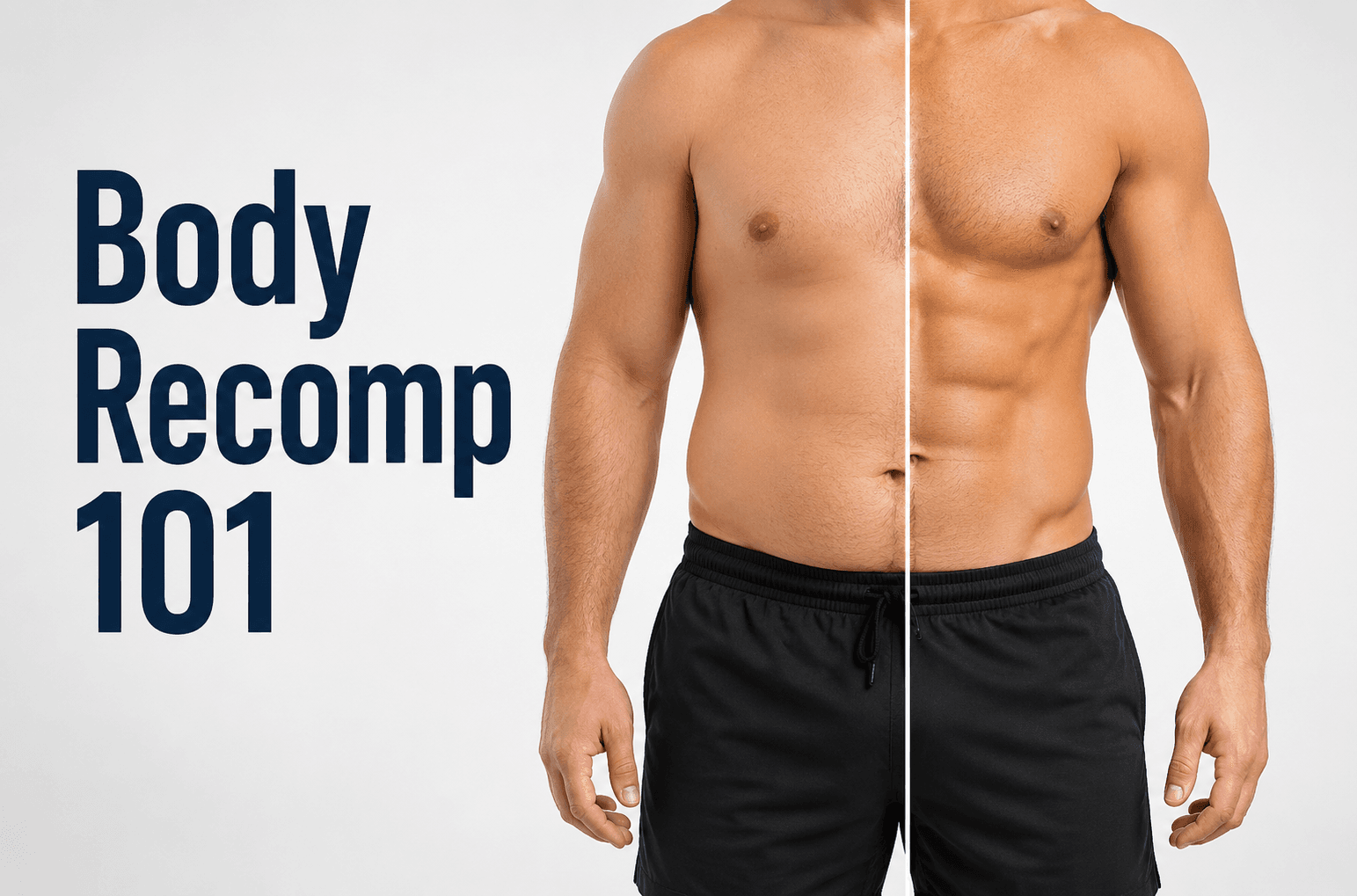
Body Recomposition Metrics: Track Fat and Muscle


Body recomposition sounds simple: lose fat, keep or build muscle, and look leaner without chasing the scale every day. In real life, it can feel confusing because the bathroom scale may move slowly, stay flat, or even rise slightly while your waist, strength, and body shape are changing.
That is why body recomposition metrics matter. If you only track pounds, you may miss progress that is happening in your measurements, strength, muscle mass, posture, and clothing fit. A better approach looks at fat loss and muscle preservation together. This is especially important during medical weight loss, GLP-1-supported weight loss, or any calorie deficit where losing muscle is not the goal.
Body Recomposition Metrics: The Quick Answer
The best body recomposition metrics are waist or circumference changes, strength performance, and body-composition tracking. Scale weight can still be useful, but it should not be the only measure. If your waist is decreasing, strength is stable or improving, and body-composition data shows fat loss with preserved muscle, your plan may be working.
Medical Disclaimer: Educational information only. Not a substitute for professional medical advice, diagnosis, or treatment. For personalized guidance, consult a qualified clinician.
What Is Body Recomposition?
Body recomposition means changing the ratio of fat mass to lean mass. For many people, the goal is to lose fat while preserving muscle. For some, especially beginners or those returning to strength training, it may also include gaining muscle while losing fat.
This is different from simple weight loss. Weight loss only tells you that total body mass went down. It does not tell you how much of that change came from fat, water, muscle, or normal daily fluctuation.
Body recomposition asks a better question: Are you losing the right kind of weight while protecting strength, function, and long-term metabolism?
That matters because muscle supports movement, strength, posture, healthy aging, glucose use, and daily function. During weight loss, a plan that protects muscle may look slower on the scale but better in real life.
Why the Scale Can Mislead You
The scale measures total body weight. It does not separate fat from muscle, water, glycogen, food in the digestive tract, inflammation, menstrual cycle changes, or sodium-related water shifts.
A person doing body recomposition may see:
- The scale stays the same, but waist size drops.
- Weight drops slowly, but strength improves.
- The scale rises after training because of water retention.
- Clothing fits better even with only modest weight change.
- 3D scan measurements improve before the scale shows much.
NIDDK notes that BMI and waist size can help evaluate weight-related health, and that waist size is useful because extra fat around the abdomen increases health risks. (NIDDK) This is one reason waist and circumference trends can be more useful than scale weight alone during a recomp phase.
The 3 Metrics That Matter Most
Body recomposition works best when you track a small set of useful metrics consistently. You do not need ten apps, daily photos, and constant body-fat checks. You need enough data to know whether fat is decreasing and muscle is being preserved.
Metric 1: Waist and Circumference Changes
Waist measurement is one of the simplest ways to track fat-loss progress, especially around the abdomen.
Measure:
- Waist at the navel
- Waist at the narrowest point if useful
- Hips
- Chest
- Thigh
- Upper arm
Use the same tape, same posture, same time of day, and same measurement points. Weekly or every two weeks is usually enough.
A good recomp sign is:
- Waist decreasing
- Clothing fitting better
- Scale stable or slowly decreasing
- Strength staying stable or improving
Maryland Trim Clinic’s 3D body scanning service captures a 360-degree digital model, circumference and cross-sectional measurements, body fat percentage, muscle mass, posture analysis, and other metrics. MTC states that scans can be repeated every few months to track changes and help set realistic goals.
Metric 2: Strength Performance
Strength is one of the clearest signs that you are preserving or building muscle.
Track:
- Exercises performed
- Sets and reps
- Weight used
- Difficulty level
- Range of motion
- Weekly consistency
- Whether performance is improving, stable, or dropping
You do not need to become a competitive lifter. But if your calories are lower and your strength is falling quickly across multiple movements, the plan may be too aggressive, protein may be too low, recovery may be poor, or training may need adjustment.
Good signs include:
- More reps with the same weight
- More weight for the same reps
- Better control and form
- Improved balance or endurance
- Less fatigue during daily activity
CDC recommends that adults get at least 150 minutes of moderate-intensity aerobic activity weekly and at least 2 days of muscle-strengthening activity each week. (CDC) Strength training is central to recomp because muscle needs a reason to stay.
Metric 3: Body Composition Tracking
Body composition tracking helps you look beyond weight.
Useful tools may include:
- 3D body scanning
- Body circumference trends
- Progress photos
- Body-fat estimates
- DEXA scan when clinically appropriate
- Clothing fit
- Strength logs
- Clinician-reviewed body-composition analysis
No method is perfect. Even advanced tools have limitations, so the trend matters more than one result.
Maryland Trim Clinic’s High-Precision 3D Body Scanning page states that reports include body fat percentage, muscle mass, posture, and segmental analysis, and that scans can be repeated every 2 to 3 months to visualize fat loss and muscle gain over time.
Body Recomposition vs Weight Loss
Weight loss and body recomposition can overlap, but they are not identical.
Goal
Main focus
Best progress signs
Weight loss
Lower scale weight
Weight trend decreases over time
Fat loss
Lower body fat
Waist, measurements, clothing, scan data improve
Muscle preservation
Keep lean mass during weight loss
Strength stays stable, protein is consistent
Muscle gain
Add lean tissue
Strength improves, muscle measurements increase
Body recomposition
Lose fat while preserving or building muscle
Waist decreases, strength improves or holds, body composition improves
A person can lose 20 pounds and still lose too much muscle. Another person may lose only 8 pounds but reduce waist size, improve strength, and look noticeably leaner.
The better outcome depends on the person’s health, starting point, goals, and medical context.
How to Lose Fat and Keep Muscle
The foundation is not complicated, but consistency matters.
Use a moderate calorie deficit
A severe deficit may produce faster scale changes, but it can also increase hunger, fatigue, poor training performance, and muscle loss risk. For body recomp, many people do better with a smaller deficit, especially if they are lifting weights and trying to preserve lean mass.
Maryland Trim Clinic’s metabolic testing and analysis uses indirect calorimetry to measure resting energy expenditure and help create personalized calorie and macronutrient goals. The clinic also notes that metabolic testing can help adjust plans as weight loss changes metabolism.
Prioritize protein
Protein supports muscle repair and helps preserve lean mass during weight loss. The International Society of Sports Nutrition states that most exercising individuals should consume about 1.4 to 2.0 grams of protein per kilogram of body weight per day to optimize training adaptations. (ISSN)
This does not mean everyone needs the same target. Protein needs may vary based on body size, age, kidney health, activity level, appetite, GLP-1 use, medical conditions, and clinician guidance.
Helpful protein sources include:
- Eggs
- Greek yogurt
- Cottage cheese
- Fish
- Chicken
- Turkey
- Lean beef
- Tofu
- Tempeh
- Beans and lentils
- Protein smoothies when food volume is difficult
Maryland Trim Clinic’s nutritional counseling and coaching includes personalized nutrition plans, portion control, label reading, nutrient timing, and support for sustainable habit change.
Strength train consistently
Resistance training gives the body a signal to preserve or build muscle. Without that signal, weight loss may come from both fat and lean mass.
A simple beginner-friendly structure may include:
- 2 to 3 strength sessions weekly
- Squat or leg press pattern
- Hip hinge pattern
- Rowing or pulling pattern
- Pressing pattern
- Core stability work
- Gradual progression over time
The goal is not pain or exhaustion. The goal is progressive training that your body can recover from.
Keep aerobic activity, but do not use it as punishment
Walking, cycling, swimming, and other aerobic activity support cardiovascular health, calorie expenditure, mood, and weight maintenance. They are helpful, but they do not replace strength training when muscle preservation is the goal.
Protect sleep and recovery
Muscle is not built during the workout alone. Recovery, sleep, protein distribution, and overall nutrition matter. If training performance is falling, soreness is constant, and appetite is extreme, the plan may need adjustment.
The Protein and Strength Training Pairing
Protein and strength training work best together.
Protein without training may help satiety and nutrition, but it does not provide the same muscle-preserving signal. Training without enough protein may limit recovery and progress. A moderate calorie deficit with adequate protein and resistance training is usually a better body-composition strategy than aggressive dieting without strength work.
ISSN’s diet and body composition position stand discusses research showing that higher protein intake combined with resistance training can support favorable body-composition changes, including lean mass preservation or gains in certain contexts. (ISSN)
For practical meals, think:
- Protein at breakfast
- Protein at lunch
- Protein at dinner
- Protein-containing snack if needed
- Fiber-rich foods for fullness and digestion
- Carbohydrates timed around training if useful
- Fluids throughout the day
Where GLP-1 Weight Loss Fits Into Recomp
Patients using GLP-1 medications may lose weight because appetite decreases and smaller meals become easier. That can be helpful, but lower appetite can also make it harder to eat enough protein or maintain strength training consistency.
Maryland Trim Clinic’s GLP-1 weight-loss injections page describes physician-supervised semaglutide and tirzepatide treatment intended to reduce appetite, increase fullness, and support weight-loss care when clinically appropriate.
For GLP-1 patients focused on body recomp, useful questions include:
- Am I eating enough protein?
- Am I losing weight too quickly for my goals?
- Has my strength declined?
- Am I doing resistance training?
- Am I tracking measurements, not just pounds?
- Do side effects affect hydration or protein intake?
- Should my clinician review my plan?
Do not change medication dosing, timing, or use without your healthcare provider. Recomp during GLP-1-supported weight loss should be monitored, especially if appetite is very low, fatigue is high, or muscle loss is a concern.
What a 12-Week Body Recomp Tracking Plan Looks Like
A 12-week structure helps because body recomposition is usually gradual.
Time frame
What to track
What to adjust
Week 1
Weight, waist, photos, strength baseline, protein estimate
Set starting plan
Weeks 2 to 4
Strength consistency, waist trend, hunger, energy
Adjust protein, steps, training load
Weeks 5 to 8
Repeat measurements and photos
Review whether deficit is too small or too aggressive
Weeks 9 to 12
Strength trend, waist, body-composition scan if available
Decide whether to continue, maintain, or change focus
A good plan does not overreact to one week. It reviews trends.
Signs Your Recomp Plan Is Working
Your plan may be working if:
- Waist is decreasing.
- Strength is stable or improving.
- Clothing fits better.
- Progress photos show shape changes.
- Energy is manageable.
- Protein is consistent.
- Training performance is not collapsing.
- Body-composition tracking shows fat loss with preserved muscle.
- Scale weight is slowly trending down or staying stable while measurements improve.
Your plan may need review if:
- Strength drops quickly across multiple workouts.
- Hunger is extreme.
- You are losing weight very rapidly.
- You are skipping protein often.
- You are constantly sore or exhausted.
- Measurements are not changing after several weeks.
- You are relying only on cardio and calorie cuts.
- You are using weight-loss medication but eating too little protein.
How Maryland Trim Clinic Supports Body Composition Tracking in Laurel, MD
Maryland Trim Clinic in Laurel, MD offers services that can support patients who want to lose fat while preserving muscle, rather than only chasing lower scale weight.
Relevant services may include 3D body scanning, metabolic testing, nutritional counseling, medical weight loss, GLP-1 weight-loss support when appropriate, and muscle building and toning.
MTC’s medical weight-loss program includes body-composition analysis, lab work, personalized nutrition, exercise guidance, behavioral support, medical interventions when appropriate, and ongoing monitoring. Its muscle building and toning service may also be relevant for patients discussing body sculpting goals, although suitability depends on individual evaluation.
A consultation may help answer:
- Which metrics should I track for my goal?
- Am I losing fat, muscle, water, or a mix?
- Is my calorie target too aggressive?
- How much protein is realistic for me?
- Should I use 3D body scanning to track muscle mass?
- How should strength training fit into my weight-loss plan?
- Is medical weight loss, nutrition coaching, or body-composition monitoring appropriate?
The Bottom Line
Body recomposition is about more than losing pounds. It is about losing fat while preserving or building muscle, strength, function, and shape.
The three metrics that matter most are waist or circumference changes, strength performance, and body-composition tracking. The scale can still help, but it should not be the only judge. If your waist is shrinking, strength is steady or improving, and body-composition data shows better fat-to-muscle balance, the plan may be working even when scale weight changes slowly.
The best recomp plan combines moderate calorie control, enough protein, consistent resistance training, adequate recovery, and better tracking. The goal is not a smaller body at any cost. The goal is a healthier, stronger body composition that you can maintain.
Frequently Asked Questions
What is body recomposition?
Body recomposition is the process of changing body composition by reducing fat mass while preserving or building lean muscle. It is different from simple weight loss because the goal is not only to lower the scale. A person may see improved measurements, strength, and body shape even when body weight changes slowly.
Which metrics show progress best?
The best body recomposition metrics are waist or circumference changes, strength performance, and body-composition tracking. Progress photos, clothing fit, and 3D body scan results can also help. MTC’s 3D body scanning service reports body fat percentage, muscle mass, posture, segmental analysis, and circumference measurements.
How much protein helps preserve muscle?
Protein needs vary, but ISSN states that most exercising individuals should consume about 1.4 to 2.0 grams of protein per kilogram of body weight per day to optimize training adaptations. Some people may need individualized targets based on age, kidney health, activity, appetite, medication use, and medical history. (ISSN)
How does strength training fit in?
Strength training provides the signal your body needs to preserve or build muscle during fat loss. CDC recommends that adults do muscle-strengthening activity at least 2 days per week. (CDC) A body recomp plan usually pairs resistance training with enough protein and a moderate calorie deficit.
Can you lose fat and build muscle at the same time?
Some people can lose fat and build muscle at the same time, especially beginners, people returning after time away from training, or those with higher starting body fat. For trained individuals, progress may be slower. A realistic goal may be fat loss with muscle preservation, rather than expecting rapid muscle gain while dieting.
Is body recomposition better than weight loss?
Body recomposition may be better when the goal is shape, strength, health, and long-term maintenance rather than just a lower number. However, some patients still need meaningful weight loss for medical reasons. The best goal depends on health history, body composition, metabolic risk, medications, and clinician guidance.
How often should I do a 3D body scan?
Maryland Trim Clinic states that 3D body scans can be repeated every 2 to 3 months to monitor progress and adjust the program. This timing is useful because body recomposition is gradual, and scanning too often may create unnecessary anxiety over small fluctuations.
What if my weight is not changing but my waist is smaller?
A smaller waist with stable weight may be a positive sign, especially if strength is stable or improving. It may suggest fat loss, muscle preservation, water shifts, or body-shape changes that the scale does not show clearly. Use measurements, photos, strength logs, and body-composition tracking before assuming the plan is failing.
Track Fat Loss and Muscle Preservation With Better Data
If you want to lose fat while protecting muscle, Maryland Trim Clinic can help you look beyond the scale. A consultation may include body-composition tracking, 3D body scanning, metabolic testing, nutrition coaching, medical weight-loss support, and realistic strength-focused planning. The goal is a healthier body composition, not just a lower number.
Track Fat Loss and Muscle Preservation With Better Data
If you want to lose fat while protecting muscle, Maryland Trim Clinic can help you look beyond the scale. A consultation may include body-composition tracking, 3D body scanning, metabolic testing, nutrition coaching, medical weight-loss support, and realistic strength-focused planning. The goal is a healthier body composition, not just a lower number.